Measure the baseline
Build a purchase baseline by category, return rate, size exchange rate, and garment replacement interval. A clear baseline helps buyers identify waste before chasing new claims.
Responsible workwear roadmap
Durable PPE and workwear can support responsible purchasing when products last longer, fit better, and enter a clear repair, reuse, or replacement process. Our roadmap is written for teams that want practical progress without unsupported environmental claims.
Discuss Program Goals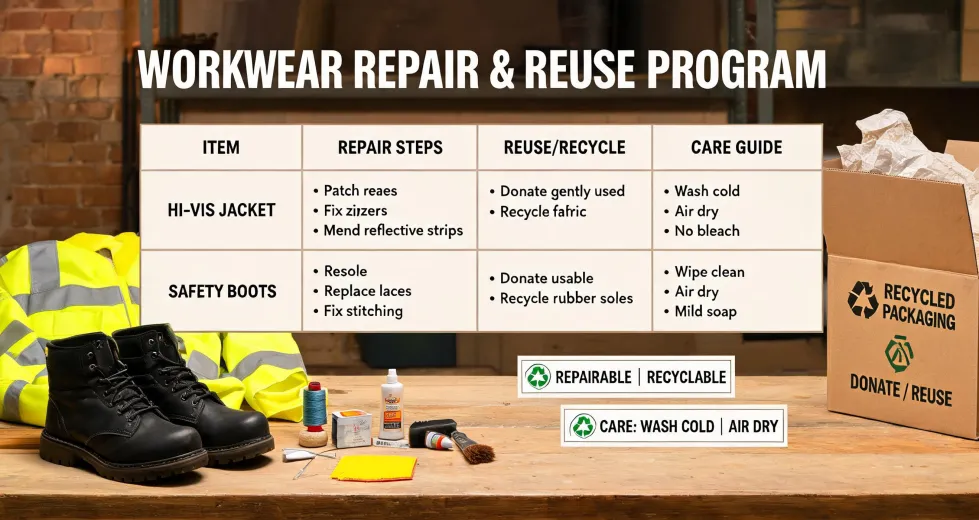
Build a purchase baseline by category, return rate, size exchange rate, and garment replacement interval. A clear baseline helps buyers identify waste before chasing new claims.
Reduce unnecessary returns with size-run planning, better crew feedback, and clearer care instructions for FR garments, rainwear, boots, and hi-vis layers.
Where performance requirements allow, review recycled content, repairability, packaging reduction, and garment designs that support longer service life.
Track Scope 1 and Scope 2 operational data where available, separate supplier estimates from verified numbers, and avoid broad "carbon neutral" statements without third-party support.
Most improvement starts with mundane details: fewer wrong sizes, fewer emergency buys, clearer documentation, and garments that workers choose to keep wearing.
Track exchanges by style and department so repeat orders start from real field data instead of generic assumptions.
Target: fewer return shipmentsAttach laundering and inspection reminders for FR garments, reflective trim, waterproof layers, and leather footwear.
Target: longer useful lifeStandard kits reduce one-off purchasing and help supervisors issue the right gear for the same job roles across locations.
Target: cleaner replenishmentCarhartt sustainability work depends on practical collaboration with buyers, safety managers, distributors, repair partners, and logistics teams. Each party sees a different source of waste, so the strongest programs keep feedback moving.
Validate whether a material or style change still fits the hazard assessment and worker acceptance goals.
Track total cost, standardization, and reorder timing rather than only the first unit price.
Report fit, wear, and care problems before they become blanket replacement habits.
Support stock planning, consolidated shipments, and documentation updates for repeat buys.
Share your current pain points: returns, short garment life, rush orders, packaging, or inconsistent sizing. We will help turn them into measurable program questions.
Start the Conversation